




您现在的ä½�置:233ç½‘æ ¡ >> 英è¯å››çº§è€ƒè¯• >> 英è¯å››çº§é¢˜åº“ >> æ¯�日一练 >> æ–‡ç« å†…å®¹
2013年英è¯å››çº§è€ƒè¯•æ¯�日一练(10月23æ—¥)
导读:
在线测试本批《æ¯�日一练》试题,å�¯æŸ¥çœ‹ç”案å�Šè§£æž�,并ä¿�ç•™å�šé¢˜è®°å½• >> 在线å�šé¢˜
- 第1é¡µï¼šç»ƒä¹ è¯•é¢˜
阅读
1. Questions27-32are based on the following passage.
  Worry is one of the most common forms of emotional distress in our culture. Almost everyone spends a considerable amount of present moments worrying about the future. And virtually all of it is for nothing. Obsessive (过分的) worry will never make things any better. In fact, such worry will very likely help you to be less effective in dealing with the present.
  In order to reduce worry, it is necessary to understand the subconscious psychological "
payoffs" for choosing to worry in the first place. "I can't do a thing. I'm too worded about... " This is a common sorrow, and one with a payoff that keeps you standing still and avoiding the risk of action. Clearly, it is easier, if less rewarding, to worry than to be an active.
  If you weigh too much, you may eat more when you worry; hence, you have a good reason for hanging on to the worry behavior. Similarly, you may find yourself smoking more in troublesome situations, and can use the worry to avoid giving up smoking. The same anxious reward system also applies to health. It may be easier for you to worry about chest pains than to risk finding out the truth, and then having to deal directly with yourself.
  Worry can bring a lot of diseases such as tension headaches and backaches. While these may not seem to be payoffs, they do result in considerable attention from others and justify much self-pity as well. And some people would rather be pitied than fulfilled.
  Now that you understand the psychological support system for neurotic worry, you can begin to devise some measures for reducing the number of troublesome worry bugs that breed in this incorrect zone.
  Begin to view your present moments as times to live, rather than times to worry about the future. When you" catch yourself worrying, ask yourself, "What am I avoiding now by using up this moment with worry?" Then begin to attack whatever you're avoiding. "
The passage is mainly concerned with _________
A.the negative effects of worry
B.the positive effects of worry
C.the causes of worry
D.the diseases caused by worry
2. 请在(73)处填上ç”案.
A.Fortunately
B.In fact
C.Logically
D.Unfortunately
3. 阅读以下�料,完�{TSE}填空题:


翻译题
4. __________ (我�点一份煎蛋和�肉),and my colleague will have two eggs on toast.
5.

6.

7. We can only __________ (ä¼ é€’è¿™å¼ å›¾ç‰‡)through the Internet.
8. _______________ (ä»–åˆšä¸€èŽ·å¾—å† å†›ï¼Žthan he told the good news to his parents.
写作
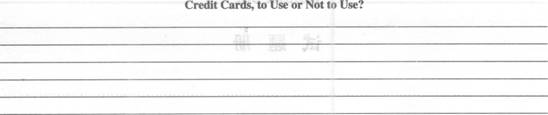
9. 1ï¼Žå› ä¸ºä¿¡ç”¨å�¡æœ‰è¯¸å¤šå¥½å¤„,越æ�¥è¶Šå¤šçš„人开始使用信用å�¡
2.使用信用�也有��弊端
3ï¼Žä½ çš„çœ‹æ³•
10.
1. 如今ä¸�å°‘å¦ç”Ÿåœ¨è‹±è¯å¦ä¹ ä¸ä¸�é‡�视拼写
2. 出现这ç§�情况的原å›
3. 为了改�这�状况,我认为…
Due Attention Should Be Given To Spelling
____________________________________________________________________________________________________________________________________________________________________
1. Questions27-32are based on the following passage.
  Worry is one of the most common forms of emotional distress in our culture. Almost everyone spends a considerable amount of present moments worrying about the future. And virtually all of it is for nothing. Obsessive (过分的) worry will never make things any better. In fact, such worry will very likely help you to be less effective in dealing with the present.
  In order to reduce worry, it is necessary to understand the subconscious psychological "
payoffs" for choosing to worry in the first place. "I can't do a thing. I'm too worded about... " This is a common sorrow, and one with a payoff that keeps you standing still and avoiding the risk of action. Clearly, it is easier, if less rewarding, to worry than to be an active.
  If you weigh too much, you may eat more when you worry; hence, you have a good reason for hanging on to the worry behavior. Similarly, you may find yourself smoking more in troublesome situations, and can use the worry to avoid giving up smoking. The same anxious reward system also applies to health. It may be easier for you to worry about chest pains than to risk finding out the truth, and then having to deal directly with yourself.
  Worry can bring a lot of diseases such as tension headaches and backaches. While these may not seem to be payoffs, they do result in considerable attention from others and justify much self-pity as well. And some people would rather be pitied than fulfilled.
  Now that you understand the psychological support system for neurotic worry, you can begin to devise some measures for reducing the number of troublesome worry bugs that breed in this incorrect zone.
  Begin to view your present moments as times to live, rather than times to worry about the future. When you" catch yourself worrying, ask yourself, "What am I avoiding now by using up this moment with worry?" Then begin to attack whatever you're avoiding. "
The passage is mainly concerned with _________
A.the negative effects of worry
B.the positive effects of worry
C.the causes of worry
D.the diseases caused by worry
2. 请在(73)处填上ç”案.
A.Fortunately
B.In fact
C.Logically
D.Unfortunately
3. 阅读以下�料,完�{TSE}填空题:


翻译题
4. __________ (我�点一份煎蛋和�肉),and my colleague will have two eggs on toast.
5.

6.

7. We can only __________ (ä¼ é€’è¿™å¼ å›¾ç‰‡)through the Internet.
8. _______________ (ä»–åˆšä¸€èŽ·å¾—å† å†›ï¼Žthan he told the good news to his parents.
写作
9. 1ï¼Žå› ä¸ºä¿¡ç”¨å�¡æœ‰è¯¸å¤šå¥½å¤„,越æ�¥è¶Šå¤šçš„人开始使用信用å�¡
2.使用信用�也有��弊端
3ï¼Žä½ çš„çœ‹æ³•
10.
1. 如今ä¸�å°‘å¦ç”Ÿåœ¨è‹±è¯å¦ä¹ ä¸ä¸�é‡�视拼写
2. 出现这ç§�情况的原å›
3. 为了改�这�状况,我认为…
Due Attention Should Be Given To Spelling
____________________________________________________________________________________________________________________________________________________________________
相关推�
课程�费试�
| ¿Î³ÌרҵÃû³Æ | ½²Ê¦ | Ô¼Û/ÓÅ»Ý¼Û | Ãâ·ÑÌåÑé | ±¨Ãû |
|---|---|---|---|---|
| ¡¶´óѧӢÓïËļ¶¡·¾«Æ·°à£¨°üÀ¨Óï·¨¡¢´Ê»ã¡¢·Ò룩 | ¶¡Ñ©Ã÷ | £¤100 / £¤100 |  |
±¨Ãû |
| ¡¶´óѧӢÓïËļ¶¡·¾«Æ·°à£¨ÔĶÁÀí½â£© | ¶¡Ñ©Ã÷ | £¤100 / £¤100 | |
±¨Ãû |
| ¡¶´óѧӢÓïËļ¶¡·¾«Æ·°à£¨ÌýÁ¦£© | ¶¡Ñ©Ã÷ | £¤100 / £¤100 | |
±¨Ãû |
| ¡¶´óѧӢÓïËļ¶¡·¾«Æ·°à£¨Ð´×÷£© | ¶¡Ñ©Ã÷ | £¤100 / £¤100 | |
±¨Ãû |
çƒç‚¹ä¸“题


