




您现在的ä½�置:233ç½‘æ ¡ >> 英è¯å››çº§è€ƒè¯• >> 英è¯å››çº§é¢˜åº“ >> æ¯�日一练 >> æ–‡ç« å†…å®¹
2014年英è¯å››çº§è€ƒè¯•æ¯�日一练(1月29æ—¥)
导读:
在线测试本批《æ¯�日一练》试题,å�¯æŸ¥çœ‹ç”案å�Šè§£æž�,并ä¿�ç•™å�šé¢˜è®°å½• >> 在线å�šé¢˜
- 第1é¡µï¼šç»ƒä¹ è¯•é¢˜
阅读
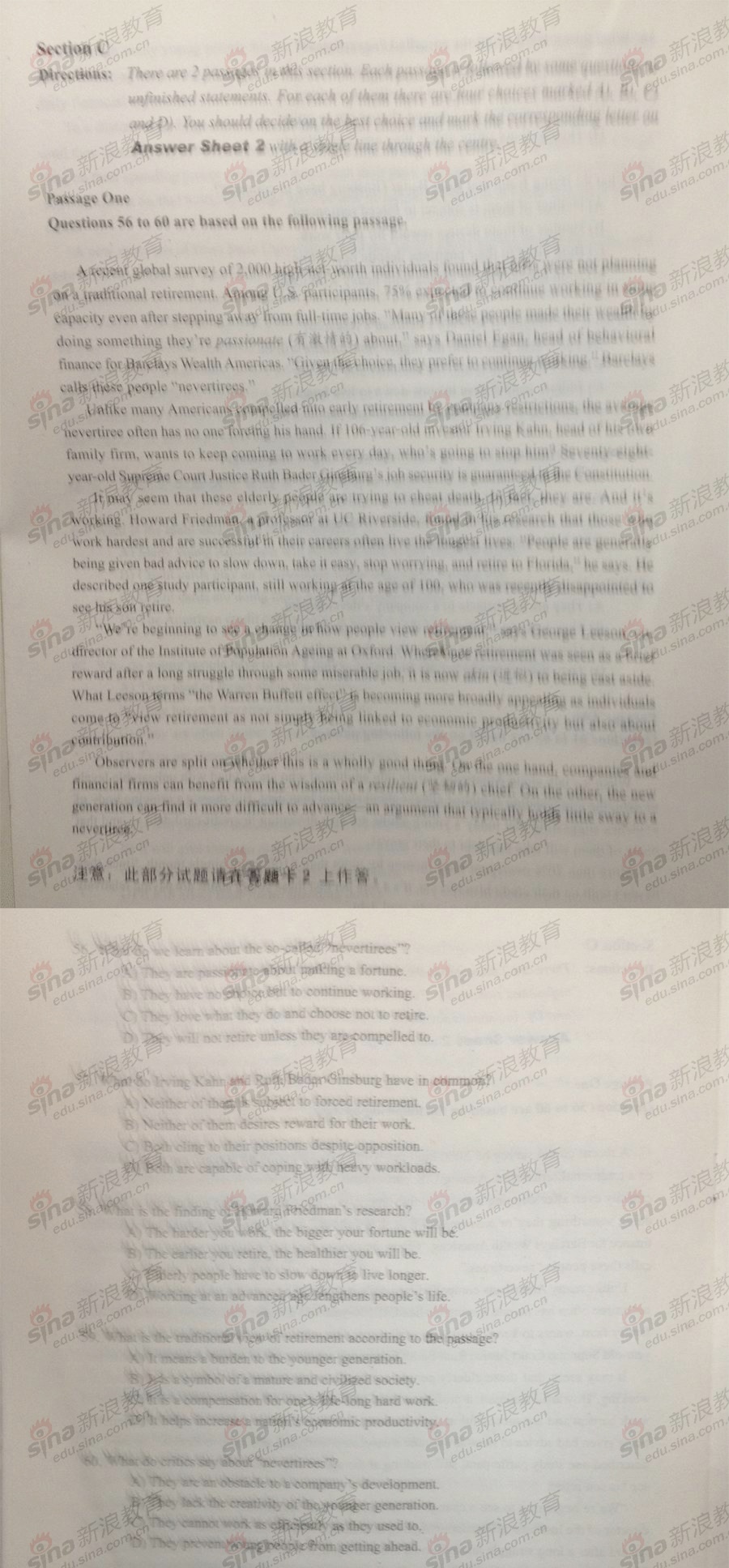
1. Questions 58-11are based on the following passage.Over the last 25 years, British society has changed a great deal--or at least many parts of it have. In some ways, however, very little has changed, particularly where attitudes are concerned. Ideas about social class--whether a person is "working- class" or "middle-class"--are one area in which changes have been extremely slow.
In the past, the working-class tended to be paid less than middle-class people, such as teachers and doctors. As a result of this and also of the fact that workers' jobs were generally much less secure, distinct differences in life-styles and attitudes came into existence. The typical working man would collect his wages on Friday evening and then, it was widely believed, having given his wife her "housekeeping", would go out and squander(浪费) the rest on beer and betting.
The stereotype ( 陈腔滥调) of what a middle-class man did with his money was perhaps nearer the truth. He was—and still is--inclined to take a longer-term view. Not only did he regard buying a house of these provided him and his family with security. Only in very few cases did workers have the opportunity (or the education and training) to make such long-term plans.
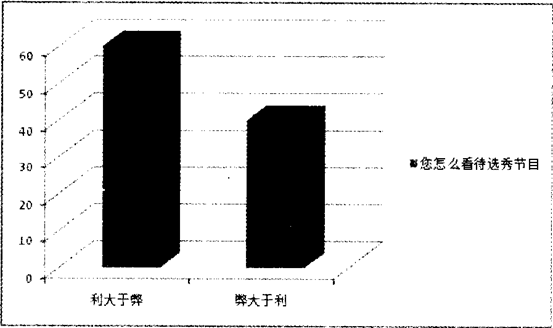
Nowadays, a great deal has changed. In a large number of cases factory workers earn as much, if not more, than their middle-class supervisors. Social security and laws to improve century, have made it less necessary than before to worry about "tomorrow". Working-class people seem slowly to be losing the feeling of inferiority they had in the past. In fact there has been a growing tendency in the past few years for the middle-classes to feel slightly ashamed(æƒæ„§çš„)of their position.
The changes in both life-styles and attitudes are probably most easily seen amongst younger people. They generally tend to share very similar tastes in music and clothes, they spend their money in having a good time, and save for holidays or longer-term plans when necessary. There seems to be much less difference than in precious generations. Nevertheless, we still have a wide gap between the well-paid (whatever the type of job they may have and the low-paid. As long as this gap exists, there will always be a possibility that new conflicts and jealousies will emerge, or rather that the old conflicts will re-appear,but between different groups.
注æ„�:æ¤éƒ¨åˆ†è¯•é¢˜è¯·åœ¨ç”题å�¡2上作ç”。
Which of the following is seen as the cause of class differences in the past?
A. Life style and occupatio
B. Attitude and incom
C. Income and job securit
D. Job security and hobbie
2. 点击按钮开始æ’放å�¬åŠ›éŸ³é¢‘
Questions 11-62are based on the conversation you have just heard.
æ ¹æ�®å�¬åˆ°çš„内容作ç”____.
A) The area is for passengers only.
B) The man is asking the woman to leave.
C) The man feels sorry for the woman.
D) The woman is a member of the staff.
3.
<--Next-->
SectionC
阅读�解
Passage Two
Question 61 to 65 are B.ased on the following passage.
When we talk aB.out Americans B.arely into adulthood who are saddled with unB.earaB.le levels of deB.t.the conversation is almost always aB.out student loan deB.t. B.ut there’s a growing B.ody of ? suggesting that today’s young adults are also drowning in credit card deB.t—and that many of them will take this deB.t to their graves.
More than 20% overspont their income B.y more than $100 every single month. Since they haven’t B.uilt up their credit historios yet,it’s a safe B.et that these young adults are paying relatively high interest rates on the resulting credit card deB.t.
注æ„�:æ¤éƒ¨åˆ†è¯•é¢˜è¯·åœ¨ç”题å�¡2上作ç”
61.What is the main ider of the first paragraph?
A.Many young Americans will never B.e aB.le to pay on their deB.ts.
B.Credit cards play an increasingly important role in college lift.
C.Credit cards are doing more ? than student loans.
D.The American credit card system is under cnticism.
62.Why do young people have to pay a higher interest on their credit card deB.t?
A.They tend to forget aB.out the deadlines.
B.They haven’t developed a ? history.
C.They are often naB.te to pay sack in time.
D.They are ? in managing money.
63.What is said to B.e the consequence of young adults relying on credit cards to make ends meet ?
A.I will place an unnecessd on society.
B.It will give their to work hard.
C.It will exert psy pressure on them.
D.It will affect their future spending power.
64 What will happen to young adults if their credit card deB.t keeps accurnufating a lucia dunn?
A.They will have to pay an increasthgly higher interest tate.
B.They may experience a crisis in their old age.
C.Their quality of lift will to affected.
D.Their credit way B.e cancelled.
65 what does Lucia Dunn think might B.e disk for the credit card issuing B.anks?
A.They go B.ankrupt as a over-lending
B.They lose la
C.Their client
D.Their interest ratcs have to B.e reduced now and then.
4. Questions62-17 are based on the following passage.
  Kodak's decision tofile for bankruptcy (ç ´äº§)protectionis a sad, though not unexpected, turning point for a leading Americancorporation that pioneered consumer photography and dominated the film marketfor decades, but ultimately failed to adapt to the digital revolution.
  Although manyattribute Kodak's downfall to "complacency (自满)," that explanation doesn't acknowledge thelengths to which the company went to reinvent itself. Decades ago, Kodakanticipated that digital photography would overtake film - and in fact, Kodakinvented the first digital camera in 1975 --- but in a fateful decision, thecompany chose to shelf its new discovery to focus on its traditional filmbusiness.
  It wasn't that Kodakwas blind to the future, said Rebecca Henderson, a professor at HarvardBusiness School, but rather that it failed to execute on a strategy to confrontit. By the time the company realized its mistake, it was too late.
  Kodak is an exampleof a firm that was very much aware that they had to adapt, and spent a lot ofmoney trying to do so, but ultimately failed. Large companies have a difficulttime switching into new markets because there is a temptation to put existingassets into the new businesses.
  Although Kodakanticipated the inevitable rise of digital photography, its corporate (�业的) culture was too rooted in thesuccesses of the past for it to make the clean break necessary to fully embracethe future. They were a company stuck in time. Their history was so importantto them. Now their history has become a liability.
Kodak's downfallover the last several decades was dramatic. In 1976, the company commanded 90%of the market for photographic film and 85% of the market for cameras. But the1980s brought new competition from Japanese film company Fuji Photo, whichundermined Kodak by offering lower prices for film and photo supplies. Kodak'sdecision not to pursue the role of official film for the 1984 Los Angeles Olympics was a major miscalculation. The bid went instead to Fuji, whichexploited its sponsorship to win a permanent foothold in the marketplace.
What do we learn about Kodak?
A.It went bankrupt all of a sudden.
B.It is approaching its downfall.
C.It initiated the digital revolution in the film industry.
D.It is playing a dominant role in the film market.
5. Section B
Directions: In this section, you will hear 3 short passages. At the end of each passage, you will hear some questions. Both the passage and the questions will be spoken only once. After you hear a question, you must choose the best answer from the four choices marked A), B), C.and D). Then mark the corresponding letter on Answer Sheet 1 with a single line through the center.
Passage One
Questions 17-47 are based on the passage you have just heard.
A.To live in the increasingly competitive world.
B.To succeed in school work.
C.To deal with stress effectively.
D.To please everyone, especially their parents.
阅读(填空题)
6. Questions 47 to 56 are based on the following passage.


请填写____47_____
7. While __________ (å…¨é�¢äº†è§£è¯¥ç—…çš„èµ·å› )may be several years away,a breakthrough leading to a successful treatment could come much sooner.
8. In a world where everyone is exhausted from over work and lack of sleep.
A.it's easy for people to become impatient
B.it's difficult to create a code of conduct
C.it's important to be friendly to everybody
D.it's hard for people to admire each other
writing
9. 1.下图为xå¸‚æŠ½æ ·è°ƒæŸ¥å¸‚æ°‘å¯¹é€‰ç§€èŠ‚ç›®æ€�度的结果,请简述该图;
2.请简述å�Œæ–¹æŒ�å�„è‡ªè§‚ç‚¹çš„åŽŸå› ï¼›
3ï¼Žä½ å¯¹é€‰ç§€èŠ‚ç›®çš„çœ‹æ³•ï¼Œæ˜¯æ”¯æŒ�ã€�å��对,还是ä¸�ç½®å�¯å�¦ï¼Œæ€»ç»“全文。
10. Will E-books Replace Traditional Books?
1.现在年轻人æµ�行在网上看电å�书ç±�
2.有人认为电å�书ç±�会å�–ä»£ä¼ ç»Ÿä¹¦ç±�
3.ä½ çš„çœ‹æ³•
1. Questions 58-11are based on the following passage.Over the last 25 years, British society has changed a great deal--or at least many parts of it have. In some ways, however, very little has changed, particularly where attitudes are concerned. Ideas about social class--whether a person is "working- class" or "middle-class"--are one area in which changes have been extremely slow.
In the past, the working-class tended to be paid less than middle-class people, such as teachers and doctors. As a result of this and also of the fact that workers' jobs were generally much less secure, distinct differences in life-styles and attitudes came into existence. The typical working man would collect his wages on Friday evening and then, it was widely believed, having given his wife her "housekeeping", would go out and squander(浪费) the rest on beer and betting.
The stereotype ( 陈腔滥调) of what a middle-class man did with his money was perhaps nearer the truth. He was—and still is--inclined to take a longer-term view. Not only did he regard buying a house of these provided him and his family with security. Only in very few cases did workers have the opportunity (or the education and training) to make such long-term plans.
Nowadays, a great deal has changed. In a large number of cases factory workers earn as much, if not more, than their middle-class supervisors. Social security and laws to improve century, have made it less necessary than before to worry about "tomorrow". Working-class people seem slowly to be losing the feeling of inferiority they had in the past. In fact there has been a growing tendency in the past few years for the middle-classes to feel slightly ashamed(æƒæ„§çš„)of their position.
The changes in both life-styles and attitudes are probably most easily seen amongst younger people. They generally tend to share very similar tastes in music and clothes, they spend their money in having a good time, and save for holidays or longer-term plans when necessary. There seems to be much less difference than in precious generations. Nevertheless, we still have a wide gap between the well-paid (whatever the type of job they may have and the low-paid. As long as this gap exists, there will always be a possibility that new conflicts and jealousies will emerge, or rather that the old conflicts will re-appear,but between different groups.
注æ„�:æ¤éƒ¨åˆ†è¯•é¢˜è¯·åœ¨ç”题å�¡2上作ç”。
Which of the following is seen as the cause of class differences in the past?
A. Life style and occupatio
B. Attitude and incom
C. Income and job securit
D. Job security and hobbie
2. 点击按钮开始æ’放å�¬åŠ›éŸ³é¢‘
点击æ’放
Questions 11-62are based on the conversation you have just heard.
æ ¹æ�®å�¬åˆ°çš„内容作ç”____.
A) The area is for passengers only.
B) The man is asking the woman to leave.
C) The man feels sorry for the woman.
D) The woman is a member of the staff.
3.
<--Next-->
SectionC
阅读�解
Passage Two
Question 61 to 65 are B.ased on the following passage.
When we talk aB.out Americans B.arely into adulthood who are saddled with unB.earaB.le levels of deB.t.the conversation is almost always aB.out student loan deB.t. B.ut there’s a growing B.ody of ? suggesting that today’s young adults are also drowning in credit card deB.t—and that many of them will take this deB.t to their graves.
More than 20% overspont their income B.y more than $100 every single month. Since they haven’t B.uilt up their credit historios yet,it’s a safe B.et that these young adults are paying relatively high interest rates on the resulting credit card deB.t.
注æ„�:æ¤éƒ¨åˆ†è¯•é¢˜è¯·åœ¨ç”题å�¡2上作ç”
61.What is the main ider of the first paragraph?
A.Many young Americans will never B.e aB.le to pay on their deB.ts.
B.Credit cards play an increasingly important role in college lift.
C.Credit cards are doing more ? than student loans.
D.The American credit card system is under cnticism.
62.Why do young people have to pay a higher interest on their credit card deB.t?
A.They tend to forget aB.out the deadlines.
B.They haven’t developed a ? history.
C.They are often naB.te to pay sack in time.
D.They are ? in managing money.
63.What is said to B.e the consequence of young adults relying on credit cards to make ends meet ?
A.I will place an unnecessd on society.
B.It will give their to work hard.
C.It will exert psy pressure on them.
D.It will affect their future spending power.
64 What will happen to young adults if their credit card deB.t keeps accurnufating a lucia dunn?
A.They will have to pay an increasthgly higher interest tate.
B.They may experience a crisis in their old age.
C.Their quality of lift will to affected.
D.Their credit way B.e cancelled.
65 what does Lucia Dunn think might B.e disk for the credit card issuing B.anks?
A.They go B.ankrupt as a over-lending
B.They lose la
C.Their client
D.Their interest ratcs have to B.e reduced now and then.
4. Questions62-17 are based on the following passage.
  Kodak's decision tofile for bankruptcy (ç ´äº§)protectionis a sad, though not unexpected, turning point for a leading Americancorporation that pioneered consumer photography and dominated the film marketfor decades, but ultimately failed to adapt to the digital revolution.
  Although manyattribute Kodak's downfall to "complacency (自满)," that explanation doesn't acknowledge thelengths to which the company went to reinvent itself. Decades ago, Kodakanticipated that digital photography would overtake film - and in fact, Kodakinvented the first digital camera in 1975 --- but in a fateful decision, thecompany chose to shelf its new discovery to focus on its traditional filmbusiness.
  It wasn't that Kodakwas blind to the future, said Rebecca Henderson, a professor at HarvardBusiness School, but rather that it failed to execute on a strategy to confrontit. By the time the company realized its mistake, it was too late.
  Kodak is an exampleof a firm that was very much aware that they had to adapt, and spent a lot ofmoney trying to do so, but ultimately failed. Large companies have a difficulttime switching into new markets because there is a temptation to put existingassets into the new businesses.
  Although Kodakanticipated the inevitable rise of digital photography, its corporate (�业的) culture was too rooted in thesuccesses of the past for it to make the clean break necessary to fully embracethe future. They were a company stuck in time. Their history was so importantto them. Now their history has become a liability.
Kodak's downfallover the last several decades was dramatic. In 1976, the company commanded 90%of the market for photographic film and 85% of the market for cameras. But the1980s brought new competition from Japanese film company Fuji Photo, whichundermined Kodak by offering lower prices for film and photo supplies. Kodak'sdecision not to pursue the role of official film for the 1984 Los Angeles Olympics was a major miscalculation. The bid went instead to Fuji, whichexploited its sponsorship to win a permanent foothold in the marketplace.
What do we learn about Kodak?
A.It went bankrupt all of a sudden.
B.It is approaching its downfall.
C.It initiated the digital revolution in the film industry.
D.It is playing a dominant role in the film market.
5. Section B
Directions: In this section, you will hear 3 short passages. At the end of each passage, you will hear some questions. Both the passage and the questions will be spoken only once. After you hear a question, you must choose the best answer from the four choices marked A), B), C.and D). Then mark the corresponding letter on Answer Sheet 1 with a single line through the center.
Passage One
Questions 17-47 are based on the passage you have just heard.
A.To live in the increasingly competitive world.
B.To succeed in school work.
C.To deal with stress effectively.
D.To please everyone, especially their parents.
阅读(填空题)
6. Questions 47 to 56 are based on the following passage.


请填写____47_____
7. While __________ (å…¨é�¢äº†è§£è¯¥ç—…çš„èµ·å› )may be several years away,a breakthrough leading to a successful treatment could come much sooner.
8. In a world where everyone is exhausted from over work and lack of sleep.
A.it's easy for people to become impatient
B.it's difficult to create a code of conduct
C.it's important to be friendly to everybody
D.it's hard for people to admire each other
writing
9. 1.下图为xå¸‚æŠ½æ ·è°ƒæŸ¥å¸‚æ°‘å¯¹é€‰ç§€èŠ‚ç›®æ€�度的结果,请简述该图;
2.请简述å�Œæ–¹æŒ�å�„è‡ªè§‚ç‚¹çš„åŽŸå› ï¼›
3ï¼Žä½ å¯¹é€‰ç§€èŠ‚ç›®çš„çœ‹æ³•ï¼Œæ˜¯æ”¯æŒ�ã€�å��对,还是ä¸�ç½®å�¯å�¦ï¼Œæ€»ç»“全文。
10. Will E-books Replace Traditional Books?
1.现在年轻人æµ�行在网上看电å�书ç±�
2.有人认为电å�书ç±�会å�–ä»£ä¼ ç»Ÿä¹¦ç±�
3.ä½ çš„çœ‹æ³•
相关推�
课程�费试�
| ¿Î³ÌרҵÃû³Æ | ½²Ê¦ | Ô¼Û/ÓÅ»Ý¼Û | Ãâ·ÑÌåÑé | ±¨Ãû |
|---|---|---|---|---|
| ¡¶´óѧӢÓïËļ¶¡·¾«Æ·°à£¨°üÀ¨Óï·¨¡¢´Ê»ã¡¢·Ò룩 | ¶¡Ñ©Ã÷ | £¤100 / £¤100 |  |
±¨Ãû |
| ¡¶´óѧӢÓïËļ¶¡·¾«Æ·°à£¨ÔĶÁÀí½â£© | ¶¡Ñ©Ã÷ | £¤100 / £¤100 | |
±¨Ãû |
| ¡¶´óѧӢÓïËļ¶¡·¾«Æ·°à£¨ÌýÁ¦£© | ¶¡Ñ©Ã÷ | £¤100 / £¤100 | |
±¨Ãû |
| ¡¶´óѧӢÓïËļ¶¡·¾«Æ·°à£¨Ð´×÷£© | ¶¡Ñ©Ã÷ | £¤100 / £¤100 | |
±¨Ãû |
çƒç‚¹ä¸“题