




您现在的ä½�置:233ç½‘æ ¡ >> 英è¯å››çº§è€ƒè¯• >> 英è¯å››çº§é¢˜åº“ >> æ¯�日一练 >> æ–‡ç« å†…å®¹
2014年英è¯å››çº§è€ƒè¯•æ¯�日一练(8月20æ—¥)
导读:
在线测试本批《æ¯�日一练》试题,å�¯æŸ¥çœ‹ç”案å�Šè§£æž�,并ä¿�ç•™å�šé¢˜è®°å½• >> 在线å�šé¢˜
- 第1é¡µï¼šç»ƒä¹ è¯•é¢˜
�项选择题
1��音频:
æ ¹æ�®æ‰€å�¬åˆ°çš„内容,回题。
A.He made things worse.
B.He messed up the deal.
C.He wasn't trusted by the woman.
D.He had a terrible day.
2ã€�回ç”题:

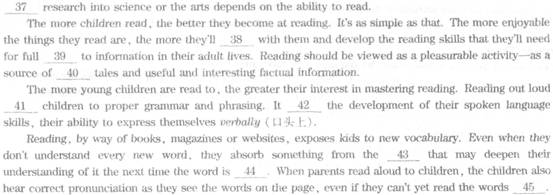
A.academic
B.access
C.accompany
D.clearly
E.comprehension
F.context
G.enables
H.encountered
I.enhances
J.entertaining
K.exposes
L.independenfly
M.specific
N.stick
O.survival
36.___________
3ã€�æ ¹æ�®ä»¥ä¸‹èµ„料,回ç”题:
A. Like many of its Caribbean neighbors, Haiti once drew many tourists. But decades of political instability, repression and poverty, as well as natural disasters, led to the decay of the tourism infrastructure, and almost no visitors come now. Officials would like to change that. The arts town of
Jacmel is one place they think could be a start.
B. A couple of untidy aid workers were sucking down Sunday morning beers at the Hotel Florita here when the minister of tourism rolled up to the roadside, followed by the interior minister with body guards and then the star of the show, New York fashion designer Donna Karan of DKNY. The notables
were in Jacmel, the funky (�有黑人韵味的爵士 ) art and carnival capital of Haiti, to plot the transformation of the earthquake-rattled port from a faded flower of the Caribbean to a resort destination for celebrities.
C. "We're trying to rebrand Haiti, and so we're bringing Donna here to help us with our vision," TourismMinister Stephanie Balrmir Villedrouin said in an interview. "We're trying to raise the bar a little bit,"Said Karma, as she swept through the abandoned Hotel Jacmeliernne--its seaside swimming pool greenwith grass, its overgrown gardens littered with broken glass--" Oh. we can definitely work with this!"
D. As hard as it may be for young Haitians to believe, their country was once a tourist destination. Evenduring the bad old days of the Duvaiier dictatorships ( 独�), the tourists came. Or at least a few: seeGraham Greene's 1966 novel The Comedians, set incidentally at a hotel and based on a real-lifemansion (大厦), the Hotel Oloffson in the capital; the hotel is still in operation but is now run byRichard Morse, front man for the rock band RAM and the new government's special political envoy (大使) to the Americas. Today, nobody visits Haiti for fun, except Haitians returning from the abroad.The arrivals at the Port-au-Prince airport is filled with Baptist missionaries, UN officials and Americannurses--not a real tourist in sight.
Tourism dollars
E. Yet across the Caribbean, revenue from tourism represents about 16 percent of gross domesticproduct, and many island nations, such as the Bahamas, Barbados and Antigua, generate at least athird of their GDP from visitors. For most of the Caribbean, tourists' dollars, euros and pesos (比索)are the No. 1 source of foreign investment.
F. Haiti let its tourism infrastructure degrade over three decades of political instability, hurricanes,earthquakes and deadly disease. But the poorest country in the Western hemisphere has a lot to offerthe adventuresome visitor, according to international planners and Haitian officials. The Creole Frenchcuisine (美食) here is some of the best in the Caribbean; its artisans are of world renown, its blend ofAfrican and Spanish music unique. All this, and rock music, too.
G. The still-evolving plans for Haiti 2. 0 forecast Jacmel as a stand-alone destination, meaning touristswould not land in the disordered, dangerous, poor capital, Port-au-Prince, but arrive directly here viaair or boat.
H.With development aid from banks and donor nations, the government of former carnival singer andcurrent President Michel Martelly is planning to extend the airport runway at Jacmel so it canacconunodate small jets that would shuttle from Miami and Fort Lauderdale, Fla. ; Puerto Rico; and Guadaloupe. The deserted port is also scheduled for restoration to allow big cruise ships to dock.
I. in the late 1800s, Jacmel was an important Caribbean crossroads in Haiti—then called the "Pearl of theAntilles"--and its downtown still harbors the Creole architecture of iron balconies and shuttered ware houses for coffee and orange peel. The town reminds many visitors of the French Quarter in New Orleans, and it hosts one of the best carnivals in the Caribbean, as well as a music festival and a filmfestival, now straggling to gain promotion again after the 2010 earthquake.
Seeing potential in ruin
J.Donna Karan knows Jacmel well; she shot her fall catalog at the Hotel Florita. The New Yorker gamelyjumped into the bed of a small track for a tour of town. It stopped at the Manoir Alexandre, once the most prominent building in the city and now a rain that is slowly being restored by Leon Paul, aHaitian American orthopedic surgeon from New York.
K. "We want to restore the mansion to its former glory, but as you can see, that is a big job," Paul saidas he walked Karan through the property, with its peeling wallpaper, holes in the roof, missing stairsand tilting balcony.
L. He said Jacmel, his home town, will rise from the ruins, and he promised that someday soon, Haitiansand visitors will be sitting in his restored mansion, listening to a band, drinking rum and celebrating.
As Karan crawled through the ruins, she saw not despair, but hope: "Wow. Look at this. These aremy colors. The rust, yellow and blue. Take a picture. This is perfect!"
In the Caribbean, Jacmel is well-known for its music festival, film festival and carnivals.
4ã€�æ ¹æ�®ä»¥ä¸Šå†…容,回ç”题。
What would it take to persuade you to exercise? A 36 to lose weight or improve your figure? To keep heart disease, cancer or high blood pressure at bay? To lower your blood pressure or cholesterol (胆固醇) ? To protect your bones? To live to a 37 old age?
You'd think any of those reasons would be sufficient to get Americans exercising, but 38 of studies have shown otherwise. It seems that public health experts, doctors and exercise devotees in the media--like me--have been using ineffective measures to 39 people who sit too much to become, and
remain, physically active.
For decades, people have been 40 with messages that regular exercise is necessary to lose weight, prevent serious disease and 41 healthy aging. And yes, most people say they value these goals. Yet a vast majority of Americans--two-thirds of whom are overweight or fat--have thus far tailed to
swallow the "exercise pill".
Now research by psychologists 42 suggests it's time to stop thinking of future health, weight loss and body image as 43 for exercise. Instead, these experts recommend a strategy marketers use to sell products: portray physical activity as a way to enhance 44 well-being and happiness.
"We need to make exercise 45 to people's daffy lives," Michelle L. Segar, a research investigator at the Institute for Research on Women and Gender at the University of Michigan, said in an interview.
"Everyone's schedule is packed with nonstop to-do's. We can only fit in what's essential. "
A.attract
B.current
C.desire
D.eagerly
E.foster
F.healthy
G.improve
H.long
I.motivators
J.numbers
K.relevant
L.scores
M.strongly
N.surrendered
O.surrounded
5��音频:
å�¬å½•éŸ³ï¼Œå›žç”题。
A.Plan his budget carefully.
B.Give her more information.
C.Ask someone else for advice.
D.Buy a gift for his girlfriend.
填空题
6�Questions are based on the following passage.
  The typical pre—industrial family not only had a good many children,but numerous other dependents as well—grandparents,uncles,aunts and cousins.Such“extended�families were suited for survival in slow paced ___36___societies.But such families are hard to___37___.They are immobile.
  Industrialism demanded masses of workers ready and able to move off the land in pursuit of jobs,and to move again whenever necessary.Thus the extended family38 shed its excess weight and the so called“nuclear�family emerged—a stripped—down,portable family unit___39___0nly of parents and a small set of children.
  This new style of family,far more___40___than the traditional extended family,became the standard model in all the industrial countries.Super-industrialism,however,the next stage of ec0—technological development,___41___ even higher mobility.Thus we may expect many among the people of the future to carry the streamlining process,a step further by remaining children,cutting the family down to its more___42___components,a man and a woman.Two people,perhaps with matched careers,will prove more efficient at navigating through education and social status,through job changes and geographic relocations,than the ordinarily child—cluttered family.A___43___maybe the postponement of children,rather than childlessness.Men and women today are often torn in___44___between a commitment to career and a commitment to children.In the future,many___45___will side aside this problem by deferring the entire task of raising children until after retirement.

第(36)题________
7� 第30题为(  )
8�第31题为(  )
简ç”题
9ã€�åŒ—äº¬æœ‰æ— æ•°çš„èƒ¡[å�¸(hutong)。平民百姓在胡å�Œé‡Œçš„生活给å�¤éƒ½åŒ—京带æ�¥äº†æ— ç©·çš„é…力。北京的胡å�Œä¸�仅仅是平民百姓的生活环境,而且还是一门建ç‘艺术。通常,胡å�Œå†…有一个大æ�‚院,房间够4到l0个家åºçš„å·®ä¸�多20å�£äººä½�。所以,胡å�Œé‡Œçš„生活充满了å�‹å–„和人情味。如今,éš�ç�€ç¤¾ä¼šå’Œç»�济的飞速å�‘展,很多胡å�Œè¢«æ–°çš„高楼大厦所å�–代。但愿胡å�Œå�¯ä»¥ä¿�留下æ�¥ã€‚
10ã€� ä¸å�Žæ°‘æ—�çš„ä¼ ç»Ÿæ–‡åŒ–å�šå¤§ç²¾æ·±ï¼Œæº�è¿œæµ�长。早在2000多年å‰�,就产生了以å”盂为代表的儒家å¦è¯´(Confucianism)和以è€�å�和庄å�为代表的é�“家å¦è¯´(Taoism),以å�Šå…¶ä»–许多也在ä¸å›½æ€�想å�²ä¸Šæœ‰åœ°ä½�çš„å¦è¯´å’Œå¦æ´¾(doctrines)。这就是有å��的诸å�百家(the masters’ hundred schools)。从å”夫å�到å™ä¸å±±ã€‚ä¸å�Žæ°‘æ—�çš„ä¼ ç»Ÿæ–‡åŒ–æœ‰è®¸å¤šå®�贵的æ€�想和å“�质,许多人民性和民主性的好东西。比如,强调ä»�爱ã€�强调群体ã€�强调天下为公。
1��音频:
点击æ’放
æ ¹æ�®æ‰€å�¬åˆ°çš„内容,回题。
A.He made things worse.
B.He messed up the deal.
C.He wasn't trusted by the woman.
D.He had a terrible day.
2ã€�回ç”题:
A.academic
B.access
C.accompany
D.clearly
E.comprehension
F.context
G.enables
H.encountered
I.enhances
J.entertaining
K.exposes
L.independenfly
M.specific
N.stick
O.survival
36.___________
3ã€�æ ¹æ�®ä»¥ä¸‹èµ„料,回ç”题:
A. Like many of its Caribbean neighbors, Haiti once drew many tourists. But decades of political instability, repression and poverty, as well as natural disasters, led to the decay of the tourism infrastructure, and almost no visitors come now. Officials would like to change that. The arts town of
Jacmel is one place they think could be a start.
B. A couple of untidy aid workers were sucking down Sunday morning beers at the Hotel Florita here when the minister of tourism rolled up to the roadside, followed by the interior minister with body guards and then the star of the show, New York fashion designer Donna Karan of DKNY. The notables
were in Jacmel, the funky (�有黑人韵味的爵士 ) art and carnival capital of Haiti, to plot the transformation of the earthquake-rattled port from a faded flower of the Caribbean to a resort destination for celebrities.
C. "We're trying to rebrand Haiti, and so we're bringing Donna here to help us with our vision," TourismMinister Stephanie Balrmir Villedrouin said in an interview. "We're trying to raise the bar a little bit,"Said Karma, as she swept through the abandoned Hotel Jacmeliernne--its seaside swimming pool greenwith grass, its overgrown gardens littered with broken glass--" Oh. we can definitely work with this!"
D. As hard as it may be for young Haitians to believe, their country was once a tourist destination. Evenduring the bad old days of the Duvaiier dictatorships ( 独�), the tourists came. Or at least a few: seeGraham Greene's 1966 novel The Comedians, set incidentally at a hotel and based on a real-lifemansion (大厦), the Hotel Oloffson in the capital; the hotel is still in operation but is now run byRichard Morse, front man for the rock band RAM and the new government's special political envoy (大使) to the Americas. Today, nobody visits Haiti for fun, except Haitians returning from the abroad.The arrivals at the Port-au-Prince airport is filled with Baptist missionaries, UN officials and Americannurses--not a real tourist in sight.
Tourism dollars
E. Yet across the Caribbean, revenue from tourism represents about 16 percent of gross domesticproduct, and many island nations, such as the Bahamas, Barbados and Antigua, generate at least athird of their GDP from visitors. For most of the Caribbean, tourists' dollars, euros and pesos (比索)are the No. 1 source of foreign investment.
F. Haiti let its tourism infrastructure degrade over three decades of political instability, hurricanes,earthquakes and deadly disease. But the poorest country in the Western hemisphere has a lot to offerthe adventuresome visitor, according to international planners and Haitian officials. The Creole Frenchcuisine (美食) here is some of the best in the Caribbean; its artisans are of world renown, its blend ofAfrican and Spanish music unique. All this, and rock music, too.
G. The still-evolving plans for Haiti 2. 0 forecast Jacmel as a stand-alone destination, meaning touristswould not land in the disordered, dangerous, poor capital, Port-au-Prince, but arrive directly here viaair or boat.
H.With development aid from banks and donor nations, the government of former carnival singer andcurrent President Michel Martelly is planning to extend the airport runway at Jacmel so it canacconunodate small jets that would shuttle from Miami and Fort Lauderdale, Fla. ; Puerto Rico; and Guadaloupe. The deserted port is also scheduled for restoration to allow big cruise ships to dock.
I. in the late 1800s, Jacmel was an important Caribbean crossroads in Haiti—then called the "Pearl of theAntilles"--and its downtown still harbors the Creole architecture of iron balconies and shuttered ware houses for coffee and orange peel. The town reminds many visitors of the French Quarter in New Orleans, and it hosts one of the best carnivals in the Caribbean, as well as a music festival and a filmfestival, now straggling to gain promotion again after the 2010 earthquake.
Seeing potential in ruin
J.Donna Karan knows Jacmel well; she shot her fall catalog at the Hotel Florita. The New Yorker gamelyjumped into the bed of a small track for a tour of town. It stopped at the Manoir Alexandre, once the most prominent building in the city and now a rain that is slowly being restored by Leon Paul, aHaitian American orthopedic surgeon from New York.
K. "We want to restore the mansion to its former glory, but as you can see, that is a big job," Paul saidas he walked Karan through the property, with its peeling wallpaper, holes in the roof, missing stairsand tilting balcony.
L. He said Jacmel, his home town, will rise from the ruins, and he promised that someday soon, Haitiansand visitors will be sitting in his restored mansion, listening to a band, drinking rum and celebrating.
As Karan crawled through the ruins, she saw not despair, but hope: "Wow. Look at this. These aremy colors. The rust, yellow and blue. Take a picture. This is perfect!"
In the Caribbean, Jacmel is well-known for its music festival, film festival and carnivals.
4ã€�æ ¹æ�®ä»¥ä¸Šå†…容,回ç”题。
What would it take to persuade you to exercise? A 36 to lose weight or improve your figure? To keep heart disease, cancer or high blood pressure at bay? To lower your blood pressure or cholesterol (胆固醇) ? To protect your bones? To live to a 37 old age?
You'd think any of those reasons would be sufficient to get Americans exercising, but 38 of studies have shown otherwise. It seems that public health experts, doctors and exercise devotees in the media--like me--have been using ineffective measures to 39 people who sit too much to become, and
remain, physically active.
For decades, people have been 40 with messages that regular exercise is necessary to lose weight, prevent serious disease and 41 healthy aging. And yes, most people say they value these goals. Yet a vast majority of Americans--two-thirds of whom are overweight or fat--have thus far tailed to
swallow the "exercise pill".
Now research by psychologists 42 suggests it's time to stop thinking of future health, weight loss and body image as 43 for exercise. Instead, these experts recommend a strategy marketers use to sell products: portray physical activity as a way to enhance 44 well-being and happiness.
"We need to make exercise 45 to people's daffy lives," Michelle L. Segar, a research investigator at the Institute for Research on Women and Gender at the University of Michigan, said in an interview.
"Everyone's schedule is packed with nonstop to-do's. We can only fit in what's essential. "
A.attract
B.current
C.desire
D.eagerly
E.foster
F.healthy
G.improve
H.long
I.motivators
J.numbers
K.relevant
L.scores
M.strongly
N.surrendered
O.surrounded
5��音频:
点击æ’放
å�¬å½•éŸ³ï¼Œå›žç”题。
A.Plan his budget carefully.
B.Give her more information.
C.Ask someone else for advice.
D.Buy a gift for his girlfriend.
填空题
6�Questions are based on the following passage.
  The typical pre—industrial family not only had a good many children,but numerous other dependents as well—grandparents,uncles,aunts and cousins.Such“extended�families were suited for survival in slow paced ___36___societies.But such families are hard to___37___.They are immobile.
  Industrialism demanded masses of workers ready and able to move off the land in pursuit of jobs,and to move again whenever necessary.Thus the extended family38 shed its excess weight and the so called“nuclear�family emerged—a stripped—down,portable family unit___39___0nly of parents and a small set of children.
  This new style of family,far more___40___than the traditional extended family,became the standard model in all the industrial countries.Super-industrialism,however,the next stage of ec0—technological development,___41___ even higher mobility.Thus we may expect many among the people of the future to carry the streamlining process,a step further by remaining children,cutting the family down to its more___42___components,a man and a woman.Two people,perhaps with matched careers,will prove more efficient at navigating through education and social status,through job changes and geographic relocations,than the ordinarily child—cluttered family.A___43___maybe the postponement of children,rather than childlessness.Men and women today are often torn in___44___between a commitment to career and a commitment to children.In the future,many___45___will side aside this problem by deferring the entire task of raising children until after retirement.

第(36)题________
7� 第30题为(  )
8�第31题为(  )
简ç”题
9ã€�åŒ—äº¬æœ‰æ— æ•°çš„èƒ¡[å�¸(hutong)。平民百姓在胡å�Œé‡Œçš„生活给å�¤éƒ½åŒ—京带æ�¥äº†æ— ç©·çš„é…力。北京的胡å�Œä¸�仅仅是平民百姓的生活环境,而且还是一门建ç‘艺术。通常,胡å�Œå†…有一个大æ�‚院,房间够4到l0个家åºçš„å·®ä¸�多20å�£äººä½�。所以,胡å�Œé‡Œçš„生活充满了å�‹å–„和人情味。如今,éš�ç�€ç¤¾ä¼šå’Œç»�济的飞速å�‘展,很多胡å�Œè¢«æ–°çš„高楼大厦所å�–代。但愿胡å�Œå�¯ä»¥ä¿�留下æ�¥ã€‚
10ã€� ä¸å�Žæ°‘æ—�çš„ä¼ ç»Ÿæ–‡åŒ–å�šå¤§ç²¾æ·±ï¼Œæº�è¿œæµ�长。早在2000多年å‰�,就产生了以å”盂为代表的儒家å¦è¯´(Confucianism)和以è€�å�和庄å�为代表的é�“家å¦è¯´(Taoism),以å�Šå…¶ä»–许多也在ä¸å›½æ€�想å�²ä¸Šæœ‰åœ°ä½�çš„å¦è¯´å’Œå¦æ´¾(doctrines)。这就是有å��的诸å�百家(the masters’ hundred schools)。从å”夫å�到å™ä¸å±±ã€‚ä¸å�Žæ°‘æ—�çš„ä¼ ç»Ÿæ–‡åŒ–æœ‰è®¸å¤šå®�贵的æ€�想和å“�质,许多人民性和民主性的好东西。比如,强调ä»�爱ã€�强调群体ã€�强调天下为公。
相关推�
课程�费试�
| ¿Î³ÌרҵÃû³Æ | ½²Ê¦ | Ô¼Û/ÓÅ»Ý¼Û | Ãâ·ÑÌåÑé | ±¨Ãû |
|---|---|---|---|---|
| ¡¶´óѧӢÓïËļ¶¡·¾«Æ·°à£¨°üÀ¨Óï·¨¡¢´Ê»ã¡¢·Ò룩 | ¶¡Ñ©Ã÷ | £¤100 / £¤100 |  |
±¨Ãû |
| ¡¶´óѧӢÓïËļ¶¡·¾«Æ·°à£¨ÔĶÁÀí½â£© | ¶¡Ñ©Ã÷ | £¤100 / £¤100 | |
±¨Ãû |
| ¡¶´óѧӢÓïËļ¶¡·¾«Æ·°à£¨ÌýÁ¦£© | ¶¡Ñ©Ã÷ | £¤100 / £¤100 | |
±¨Ãû |
| ¡¶´óѧӢÓïËļ¶¡·¾«Æ·°à£¨Ð´×÷£© | ¶¡Ñ©Ã÷ | £¤100 / £¤100 | |
±¨Ãû |
çƒç‚¹ä¸“题


