




2015年英è¯å››çº§è€ƒè¯•æ¯�日一练(5月4æ—¥)
- 第1é¡µï¼šç»ƒä¹ è¯•é¢˜
1ã€�æ ¹æ�®æ��料,回ç”问题。
Directions: There are 2 passages in this section. Each passage is followed by some questions or unfinished statements. For each of them there are four choices markedA.,B., C. and D.. You should decide on the best choice and mark the corresponding letter on Answer Sheet 2 with a single line through the centre.
Passage One
Questions 56 to 60 are based on the following passage.
Let children learn to judge their own work. A child learning to talk does not learn by being corrected all the time: if corrected too much, he will stop talking. He notices a thousand times a day the difference between the language he uses and the language those around him use. Bit by bit, he makes the necessary changes to make his language like other people's. In the same way, when children learn to do all the other things they learn to do without being taught to walk, run, climb, whistle, ride a bicycle--compare those performances with those of more skilled people, and slowly make the needed changes. But in school we never give a child a chance to find out his own mistakes for himself, let alone correct them. We do it all for him. We act as if we thought that he would never notice a mistake unless it was pointed out to him, or correct it unless he was made to. Soon he becomes dependent on the teacher. Let him do it himself. Let him work out, with the help of other children if he wants it, what this word says, what answer is to that problem, whether this is a good way of saying or doing this or not.
If it is a matter of right answers, as it may be in mathematics or science, give him the answer book. Let him correct his own papers. Why should we teachers waste time on such routine work? Our job should be to help the child when he tells us that he can't find the way to get the right answer. Let's end this nonsense of grades, exams,marks. Let us throw them all out, and let the children learn what all educated persons must someday learn, how to measure their own understanding, how to know what they know or do not know.
Let them get on with this job in the way that seems most sensible to them, with our help as school teachers if they ask for it. The idea that there is a body of knowledge to be learnt at school and used for the rest of one's life is nonsense in a world as complicated and rapidly changing as ours. Anxious parents and teachers say, "But suppose they fail to learn something essential, something they will need to get in the world?" Don't worry! If it is essential, they will go out into the world and learn it.
What does the author think is the best way for children to learn things?
A.By imitating what other people do.
B.By making mistakes and having them corrected.
C.By listening to explanations from skilled people.
D.By asking a great many questions.
2��音频:
Directions: In this section, you will hear 8 short conversations and 2 long conversations. At the end of each conversation, one or more questions will be asked about what was said. Both the conversation and the questions will be spoken only once. After each question there will be a pause. During the pause, you must read the four choices marked A ),B., C. andD., and decide which is the best answer. Then mark the corresponding letter on Answer Sheet 1 with a single line through the centre.
A.She copied another course guide.
B.She decided to skip class.
C.She went to the library instead.
D.She shared a friend's course guide.
填空题
3�
__________
简ç”题
4�Directions: For this part, you are allowed 30 minutes to translate a passage from Chinese into English. You should write your answer on Answer Sheet 2.
ä¸å›½ä¸å¤®ç”µè§†å�°æ˜¥èŠ‚è�”欢晚会,简称为春晚,是æ¯�年农历除夕为庆ç¥�农历新年而现场直æ’çš„é‡�è¦�晚会。自1983年首届春节è�”欢晚会在ä¸å¤®ç”µè§†å�°æ’出以æ�¥ï¼Œæ¯�年除夕之夜它都如期æ’å‡ºï¼Œè¿™ä¸€ä¼ ç»Ÿä¸€ç›´å»¶ç»è‡³ä»Šã€‚春晚在演出规模ã€�演员阵容ã€�æ’出时长和海内外收视率上创下了世界之。春晚也æˆ�了大多数ä¸å›½äººæ¯�逢春节必看的电视节目,是ä¸å›½é™¤å¤•ä¹‹å¤œçš„文化盛宴。
5�题目一
Directions:For this part,you are allowed 30 minutes to write a short essay on thefollowing question.You should write at least 120 words but no more than 180 words.
Suppose a foreign friend of yours is coming to visit your hometown,what is the most interesting place you would like to take him�her to see and why?
题目二
Directions:For this part,you are allowed 30 minutes to write a short essay on thefollowing question.You should write at least.120.words but no more than.180.words.Suppose a foreign friend of yours is coming to visit China,what is the most interesting place you would like to take him�her to see and why?
题目三
Directions:For this part,you are allowed 30 minutes to write a short essay on thefollowing question.You should write at least.120.words but no more than.180.words.Suppose a foreign friend of yours is coming to visit your campus,what is the most interesting place you would like to take him�her to see and why?
6ã€�å�‡æ—¥ç»�济的现象表明:ä¸å›½æ¶ˆè´¹è€…的消费观æ£åœ¨å�‘生巨大å�˜åŒ–ã€‚æ ¹æ�®ç»Ÿè®¡æ•°æ�®ï¼Œä¸å›½æ¶ˆè´¹è€…的消费需求æ£åœ¨ä»ŽåŸºæœ¬ç”Ÿæ´»å¿…需å“�转å�‘对休闲ã€�舒适和个人å�‘展的需求。å�Œæ—¶ï¼Œä¸å›½äººçš„消费观(consumptï¼›on concept)在蓬勃å�‘展的å�‡æ—¥ç»�济ä¸æ£å�˜å¾—æˆ�ç†Ÿã€‚å› æ¤äº§å“�结构应å�šç›¸åº”调整,æ�¥é€‚应社会的å�‘展。å�¦ä¸€æ–¹é�¢ï¼Œæœ�务质é‡�è¦�改善,以满足人们æ��高生活质é‡�çš„è¦�求。
7ã€�世界上å®�贵的除了良好的心ç�†ç´ 质,还有一个东西,那就是勤奋。å®�贵的勤奋,ä¸�仅是身体上的勤奋,而且是精神上的勤奋。文å¦å®¶è¯´ï¼Œå‹¤å¥‹æ˜¯æ‰“开文å¦æ®¿å ‚之门的一把钥匙;科å¦å®¶è¯´ï¼Œå‹¤å¥‹èƒ½ä½¿äººè�ªæ˜Žï¼›æ”¿æ²»å®¶è¯´ï¼Œå‹¤å¥‹æ˜¯å®žçŽ°ç�†æƒ³çš„基石;而平凡的人则说,勤奋是一ç§�ä¼ ç»Ÿçš„ç¾Žå¾·ã€‚å�¯è§�,勤奋富有了多么巨大的底蕴与é…力。人类如果丢弃了它。ä¸�行。
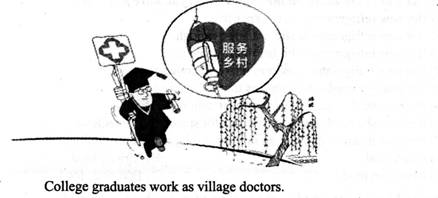
8�You should write an essay entitled It Pays to Plan by commenting on the saying“lt wasn ’t raining when Noah built the ark.�You can give examples to illustrate your point.
写作导航
1.通过俗è¯æ�¥è¯ 释计划的é‡�è¦�æ„�义;
2.解释为什么计划如æ¤é‡�è¦�,并以CE0æ�¥ä¸¾ä¾‹è¯´æ˜Žï¼›
3.得出结论,建议大家�事情之�都应该制定详细的计划。
9�You should write an email inreply to a friend"s inquiry about whether you are going to work or continue your study after graduation.You shouM also explain the reasons behind your choice.
写作导航
1.回应对方æ�¥ä¿¡ï¼Œæ��出自己的观点,å�³ä¼šé€‰æ‹©ç»§ç»æ·±é€ ï¼›
2.从就业形势和知识的é‡�è¦�性两方é�¢é˜�述了å�šå‡ºè¯¥é€‰æ‹©çš„åŽŸå› ï¼Œå¹¶æŒ‡å‡ºä¼šé€šè¿‡
å�‚åŠ å®žè·µæ´»åŠ¨æ�¥ä¿�æŒ�与时俱进;
3.进行总结;
4ï¼ŽæŒ‰ç…§ä¹¦ä¿¡æ ¼å¼�表达感谢和ç¥�愿。
10�
| ¿Î³ÌרҵÃû³Æ | ½²Ê¦ | Ô¼Û/ÓÅ»Ý¼Û | Ãâ·ÑÌåÑé | ±¨Ãû |
|---|---|---|---|---|
| ¡¶´óѧӢÓïËļ¶¡·¾«Æ·°à£¨°üÀ¨Óï·¨¡¢´Ê»ã¡¢·Ò룩 | ¶¡Ñ©Ã÷ | £¤100 / £¤100 |  |
±¨Ãû |
| ¡¶´óѧӢÓïËļ¶¡·¾«Æ·°à£¨ÔĶÁÀí½â£© | ¶¡Ñ©Ã÷ | £¤100 / £¤100 | |
±¨Ãû |
| ¡¶´óѧӢÓïËļ¶¡·¾«Æ·°à£¨ÌýÁ¦£© | ¶¡Ñ©Ã÷ | £¤100 / £¤100 | |
±¨Ãû |
| ¡¶´óѧӢÓïËļ¶¡·¾«Æ·°à£¨Ð´×÷£© | ¶¡Ñ©Ã÷ | £¤100 / £¤100 | |
±¨Ãû |