




您现在的ä½�置:233ç½‘æ ¡ >> 英è¯å››çº§è€ƒè¯• >> 英è¯å››çº§é¢˜åº“ >> ç« èŠ‚ç»ƒä¹ >> æ–‡ç« å†…å®¹
2014年英è¯å››çº§è€ƒè¯•ç« èŠ‚ç»ƒä¹ æ¯�日一练(11月4æ—¥)
导读:
在线测试本批《æ¯�日一练》试题,å�¯æŸ¥çœ‹ç”案å�Šè§£æž�,并ä¿�ç•™å�šé¢˜è®°å½• >> 在线å�šé¢˜
- 第1é¡µï¼šç»ƒä¹ è¯•é¢˜
�项选择题
1��音频:
å�¬å½•éŸ³ï¼Œå›žç”题。
A.Plan his budget carefully.
B.Give her more information.
C.Ask someone else for advice.
D.Buy a gift for his girlfriend.
2�Passage Three
Questions are based on the passage you have just heard.
A.Its large rooms.
B.Its unusual location.
C.Its comfortable chairs.
D.The number of its readers.
3ã€�æ ¹æ�®ä»¥ä¸‹èµ„料,回ç”题:
Passage One
Quesaons 56 to 60 are based on thefollowingpassage.
The vast glaciers of western Antarctica are rapidly melting and losing ice to the sea and almost certainly have“passed the point of no return,�according to new work by two separate teams of scientists.
The likely result:a rise in global sea levels of 4 feet or more in the coming centuries,says research made public Monday by scientists at the University of Washington,the University of California-Irvine and NASA's Jet Propulsion Laboratory.
“It really is an amazingly distressing situation,â€�says Pennsylvania State University glaciologist(冰å·�å¦å®¶)Sridhar Anandakrishnan,who was not affiliated with either study.“This is a huge part of West Antarctica.and it seems to have been kicked over the edge.â€�
The researchers say the fate of the glaciers is almost certainly beyond hope.
One study shows that a river of ice called Thwaites Glacier is probably in the early stages of collapse.Total collapse is almost inevitable.the study shows.
A second study shows that a halfdozen glaciers are pouring ice into the sea at an ever-greater pace.That will trigger 4 feet of sea-level rise,says study author Eric Rignot,a glaciologist at the University of Califomia-Irvine,and NASA's Jet Propulsion Laboratory.
“The retreat of ice in that area is unstoppable,�Rignot said at a briefing Monday,adding that the glaciers have“passed the point of no return.�
Rignot and his team used data from satellites and aircraft to map changes in six West Antarctic glaciers and the terrain underlying these massive ice floes(浮冰).The data show the glaciers are stretching out,thinning and shrinking in volume.They’re A.so flowing faster from the continent’s interior to the sea,dumping larger quantities of ice into the ocean than before and thereby raising sea levels.
At the same time,the portion of each glacier projecting into the sea is being melted from below by warm ocean water.That leads to a vicious cycle of more thinning and faster flow,and the local Terrain offers no barrier to the glaciers’retreat,the researchers report in an upcoming issue of Geophysical Research Leaers.
A report in this week’s Science says the Thwaites Glacier will collapse.perhaps in 200 years.The paper doesn’t specify the amount of sea-level rise associated with nlwaites’demise.
Who contributed to the Monday research?
A.The two separate teams of scientists.
B.Scientists at the University of Washington,of California.Irvine and NASA's Lab.
C.Scientists at Pennsylvania State University.
D.Several glaciologists.
4ã€�æ ¹æ�®ä»¥ä¸‹èµ„料,回ç”题:
Wbrld Must Adapt to Unknown Climate Future
A.There is still great uncertainty about the impacts of climate change,according to the latest report from the Intefgovernmental Panel on Climate Change,released today.So if we are to survive and prosper, rather than trying to fend off specific threats like cyclones,we must build flexible and resilient(有弹性的)societies.
B.Today’s report is the second of three instalments(分期连载)of the IPCC’s fifth assessment of climate change.The first instalment,released last year,covered the physical science of climate change.It stated with increased certainty that climate change is happenin9,and that it is the result of humanity’s greenhouse gas emissions.The new report focuses on the impacts of climate change and how to adapt to them.The third instalment,on how to cut greenhouse gas emissions,comes out in April.
C.The latest report backs off from some of the predictions made in the previous IPCC report,in 2007.During the final editing process.the authors also retreated from many of the more confident projections from the final draft,leaked last year.The IPCC now says it often cannot predict which specific impacts of climate change—such as droughts,storms or floods——will hit particular places.
D.Instead,the IPCC focuses on how people call adapt in the face of uncertainty,arguing that we must become resilient against diverse changes in the climate.“The natural human tendency is to want things to be clear and simple.�says the report’s co-chair Chris Field of the Carnegie Institution for Science in Stanford,Califomia.“And one of the messages that doesn’t just come from the IPCC,it comes from history,is that the future doesn’t ever turn out the way you think it will be.�That means,Field adds,that‘'being prepared for a wide range of possible futures is iust always smart�.
E.Here New Scientist breaks down what is new in the report,and what it means for humanity’s efforts to cope with a changing climate.A companion article,“How climate change will affect where you live�,highlights some of the key impacts that different regions are facing.What has changed in the new IPCC report?
F.In essence,the predictions are intentionally vaguer.Much of the firlner language from the 2007 report about exactly what kind of weather to expect,and how changes witl affect people,has been replaced with more cautious statements.The scale and timing of many regional impacts,and even the form of some,now appear uncertain.
G.For example,the 2007 report predicted that the intensity of cyclones over Asia would increase by 10to 20 per cent.The new report makes no such claim.Similarly,the last report estimated that climate change would force up to a quarter of a billion Africans into water shortage by the end of this decade.The new report avoids using such firm numbers.
H.The report has even watered down many of the more confident predictions that appeared in the lcaked drafts.References to“hundreds of millions�of people being affected by rising sea levels have been removed from the summary,as have statements about the impact of warmer temperatures on crops.“I think it's gone back a bit,�says Jean Palutikof of Griffith University in Brisbane,Queensland,Australia,who worked on the 2007 report.“That may be a good thing.In the fourth [climate assessment]we tried to do things that weren’t really possible and the fifth has sort of rebalanced the whole thing.�
So do we know less than we did before?
I.Not really,says Andy Pitman of the University of New South Wales in Sydney,Australia.It is just more rigorous language.“Pointing to the sign of the change,rather than the precise magnitude of the change,is scientifically more defensible,�he says.
J.We also know more about what we don’t know,says David Karoly at the University of Melbourne.“There is now a better understanding of uncertainties in regional climate proj ections at decadal timescales(æ—¶æ ‡).â€�
Are we less confident about all the impacts of climate change?
K.Not quite.There are still plenty of confident predictions of impacts in the reponv—at least in the draft chapters that were lcaked last year,and which are expected to be roughly the same when they are released later this week.These include more rain in parts ofAfrica,more heatwaves in southem Europe,and more frequent droughts in Australia(see“How climate change will affect where you live�).It also remains clear that the seas are rising.How do we prepare in cases in which there is low confidence about the effects of climate change?
L.That’s exactly what this report deals with.In many cases,the uncertainty is a matter of magnitude,so the choices are not hard.“It doesn’t really matter if the car hits the wall at 70 or 80 kilometres an hour,�says Karoly.“You should still wear your seat belt.�So when it comes to sea.1evel rise or heatwaves,the uncertainty does not change what we need to do:build sea walls,use efficient cooling and so forth.
M.But in some cases——such as African rainfall,which could go up or down——the models are not giving us great advice.so all we know is that things will change.“We are not certain about the precise nature of regional change,but we are absolutely certain there are going to be profound changes in many regions,�says Pitman.Even then,there are things we can do that will always help.A big one is getting people out of poverty.The report says poverty makes other impacts worse and many suggested adaptations are about alleviating it.The IPCC suggests giving disadvantaged groups more of a voice,helping them move when they need to and strengthening social safety nets.
N.What’s more,all countries should diversify their economies,rather than relying on a few main sources of income that could flood or blow ovel Countries should also find ways to become less vulnerable to the current climate variability.That means improving the way they govem resources like water,the report says.
O.In short,we must become more resilient.That would be wise even if the climate was stable.Our current infrastructure often cannot deal with the current climate,says Karoly,pointing to events like the recent UK floods.“We don’t have a resilient system now,even in extremely well developed countries.�
注æ„�:æ¤éƒ¨åˆ†è¯•é¢˜è¯·åœ¨ç”题å�¡2上作ç”。
Focusing on the clue of climate change instead of the severity of climate effects is scientifically more reasonable.
填空题
5ã€�With the noise going on outside the classroom,I had great difficulty_______(集ä¸æ³¨æ„�力å¤�ä¹ åŠŸè¯¾).
简ç”题
6ã€�北京市交通å�‘è¾¾ã€‚äº¤é€šå·¥å…·å¤šæ ·åŒ–ã€‚å…¬äº¤è½¦æ˜¯æ™®é€šè€�百姓出门的主è¦�交通工具。æ¯�辆大型公共汽车的å‰�ã€�å�Žé—¨å�„有一ä½�售票员招呼乘客,票价一律1元起价。空调公共汽车的票价为2元至11元。å¦ç”Ÿç¥¨å�¯ä»¥æ‰“四折(60ï¼…d i scount)。北京的出租车也很å�‘达,出租车éš�处å�¯è§�,é�žå¸¸æ–¹ä¾¿ã€‚在机场ã€�ç�«è½¦ç«™å’Œæ—…游地,都有出租车昼夜æœ�务。北京地é“�是新ä¸å›½æ�¡åœ°é“�,三å��多年æ�¥ï¼Œç´¯è®¡è¿�é€�乘客近60亿人次。
7ã€�泼水节(Water-Spri nk|ing Festi va|)是傣æ—�隆é‡�的节日,也å�¯ä»¥ç§°ä¹‹ä¸ºå‚£æ—�的“新年â€�。泼水节已有700多年的历å�²ï¼Œä¸€èˆ¬åœ¨æ¯�å¹´çš„4月13日举行,æŒ�ç»3至7天。大家用纯净的清水相互泼洒,祈求洗去过去一年的ä¸�顺,新的一年带ç�€ç¾Žå¥½çš„愿望å†�次出å�‘。人们把第三天视为美好å�‰ç¥¥çš„æ—¥å�。在这天,人们观看龙舟竞赛,跳å”雀舞。活动内容丰富,场é�¢æž�为çƒé—¹ã€‚除了我国傣æ—�,亚洲其他国家,如泰国,也有庆ç¥�æ³¼æ°´èŠ‚çš„ä¹ ä¿—ã€‚
8�You shouM write a short essay entitled Limiting the Use ofDisposable Plastic Bags.
写作导航
1.一次性塑料袋曾被广泛使用;
2.使用一次性塑料袋带�的问题;
3.�制使用一次性塑料袋的�义
9�
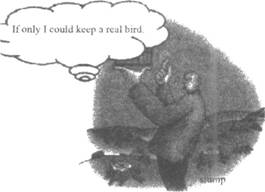
_______________________________________________________________________
_______________________________________________________________________
_______________________________________________________________________
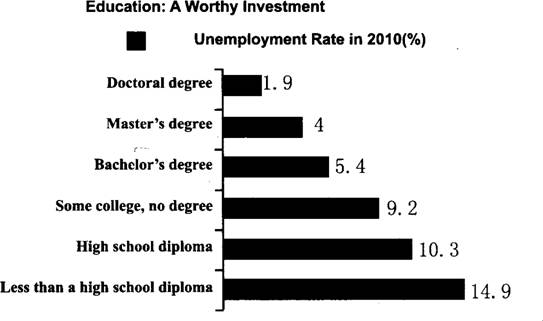
10�Directions:For this part,you are allowed 30 minutes to write a short essay entitled Education Pays based on the statistics provided in the chart below(Unemployment rate in 2010.Please give a brief description of the chart first and then make comments on it.You should write at least 120 words but no more that 180 words.
1��音频:
点击æ’放
å�¬å½•éŸ³ï¼Œå›žç”题。
A.Plan his budget carefully.
B.Give her more information.
C.Ask someone else for advice.
D.Buy a gift for his girlfriend.
2�Passage Three
Questions are based on the passage you have just heard.
A.Its large rooms.
B.Its unusual location.
C.Its comfortable chairs.
D.The number of its readers.
3ã€�æ ¹æ�®ä»¥ä¸‹èµ„料,回ç”题:
Passage One
Quesaons 56 to 60 are based on thefollowingpassage.
The vast glaciers of western Antarctica are rapidly melting and losing ice to the sea and almost certainly have“passed the point of no return,�according to new work by two separate teams of scientists.
The likely result:a rise in global sea levels of 4 feet or more in the coming centuries,says research made public Monday by scientists at the University of Washington,the University of California-Irvine and NASA's Jet Propulsion Laboratory.
“It really is an amazingly distressing situation,â€�says Pennsylvania State University glaciologist(冰å·�å¦å®¶)Sridhar Anandakrishnan,who was not affiliated with either study.“This is a huge part of West Antarctica.and it seems to have been kicked over the edge.â€�
The researchers say the fate of the glaciers is almost certainly beyond hope.
One study shows that a river of ice called Thwaites Glacier is probably in the early stages of collapse.Total collapse is almost inevitable.the study shows.
A second study shows that a halfdozen glaciers are pouring ice into the sea at an ever-greater pace.That will trigger 4 feet of sea-level rise,says study author Eric Rignot,a glaciologist at the University of Califomia-Irvine,and NASA's Jet Propulsion Laboratory.
“The retreat of ice in that area is unstoppable,�Rignot said at a briefing Monday,adding that the glaciers have“passed the point of no return.�
Rignot and his team used data from satellites and aircraft to map changes in six West Antarctic glaciers and the terrain underlying these massive ice floes(浮冰).The data show the glaciers are stretching out,thinning and shrinking in volume.They’re A.so flowing faster from the continent’s interior to the sea,dumping larger quantities of ice into the ocean than before and thereby raising sea levels.
At the same time,the portion of each glacier projecting into the sea is being melted from below by warm ocean water.That leads to a vicious cycle of more thinning and faster flow,and the local Terrain offers no barrier to the glaciers’retreat,the researchers report in an upcoming issue of Geophysical Research Leaers.
A report in this week’s Science says the Thwaites Glacier will collapse.perhaps in 200 years.The paper doesn’t specify the amount of sea-level rise associated with nlwaites’demise.
Who contributed to the Monday research?
A.The two separate teams of scientists.
B.Scientists at the University of Washington,of California.Irvine and NASA's Lab.
C.Scientists at Pennsylvania State University.
D.Several glaciologists.
4ã€�æ ¹æ�®ä»¥ä¸‹èµ„料,回ç”题:
Wbrld Must Adapt to Unknown Climate Future
A.There is still great uncertainty about the impacts of climate change,according to the latest report from the Intefgovernmental Panel on Climate Change,released today.So if we are to survive and prosper, rather than trying to fend off specific threats like cyclones,we must build flexible and resilient(有弹性的)societies.
B.Today’s report is the second of three instalments(分期连载)of the IPCC’s fifth assessment of climate change.The first instalment,released last year,covered the physical science of climate change.It stated with increased certainty that climate change is happenin9,and that it is the result of humanity’s greenhouse gas emissions.The new report focuses on the impacts of climate change and how to adapt to them.The third instalment,on how to cut greenhouse gas emissions,comes out in April.
C.The latest report backs off from some of the predictions made in the previous IPCC report,in 2007.During the final editing process.the authors also retreated from many of the more confident projections from the final draft,leaked last year.The IPCC now says it often cannot predict which specific impacts of climate change—such as droughts,storms or floods——will hit particular places.
D.Instead,the IPCC focuses on how people call adapt in the face of uncertainty,arguing that we must become resilient against diverse changes in the climate.“The natural human tendency is to want things to be clear and simple.�says the report’s co-chair Chris Field of the Carnegie Institution for Science in Stanford,Califomia.“And one of the messages that doesn’t just come from the IPCC,it comes from history,is that the future doesn’t ever turn out the way you think it will be.�That means,Field adds,that‘'being prepared for a wide range of possible futures is iust always smart�.
E.Here New Scientist breaks down what is new in the report,and what it means for humanity’s efforts to cope with a changing climate.A companion article,“How climate change will affect where you live�,highlights some of the key impacts that different regions are facing.What has changed in the new IPCC report?
F.In essence,the predictions are intentionally vaguer.Much of the firlner language from the 2007 report about exactly what kind of weather to expect,and how changes witl affect people,has been replaced with more cautious statements.The scale and timing of many regional impacts,and even the form of some,now appear uncertain.
G.For example,the 2007 report predicted that the intensity of cyclones over Asia would increase by 10to 20 per cent.The new report makes no such claim.Similarly,the last report estimated that climate change would force up to a quarter of a billion Africans into water shortage by the end of this decade.The new report avoids using such firm numbers.
H.The report has even watered down many of the more confident predictions that appeared in the lcaked drafts.References to“hundreds of millions�of people being affected by rising sea levels have been removed from the summary,as have statements about the impact of warmer temperatures on crops.“I think it's gone back a bit,�says Jean Palutikof of Griffith University in Brisbane,Queensland,Australia,who worked on the 2007 report.“That may be a good thing.In the fourth [climate assessment]we tried to do things that weren’t really possible and the fifth has sort of rebalanced the whole thing.�
So do we know less than we did before?
I.Not really,says Andy Pitman of the University of New South Wales in Sydney,Australia.It is just more rigorous language.“Pointing to the sign of the change,rather than the precise magnitude of the change,is scientifically more defensible,�he says.
J.We also know more about what we don’t know,says David Karoly at the University of Melbourne.“There is now a better understanding of uncertainties in regional climate proj ections at decadal timescales(æ—¶æ ‡).â€�
Are we less confident about all the impacts of climate change?
K.Not quite.There are still plenty of confident predictions of impacts in the reponv—at least in the draft chapters that were lcaked last year,and which are expected to be roughly the same when they are released later this week.These include more rain in parts ofAfrica,more heatwaves in southem Europe,and more frequent droughts in Australia(see“How climate change will affect where you live�).It also remains clear that the seas are rising.How do we prepare in cases in which there is low confidence about the effects of climate change?
L.That’s exactly what this report deals with.In many cases,the uncertainty is a matter of magnitude,so the choices are not hard.“It doesn’t really matter if the car hits the wall at 70 or 80 kilometres an hour,�says Karoly.“You should still wear your seat belt.�So when it comes to sea.1evel rise or heatwaves,the uncertainty does not change what we need to do:build sea walls,use efficient cooling and so forth.
M.But in some cases——such as African rainfall,which could go up or down——the models are not giving us great advice.so all we know is that things will change.“We are not certain about the precise nature of regional change,but we are absolutely certain there are going to be profound changes in many regions,�says Pitman.Even then,there are things we can do that will always help.A big one is getting people out of poverty.The report says poverty makes other impacts worse and many suggested adaptations are about alleviating it.The IPCC suggests giving disadvantaged groups more of a voice,helping them move when they need to and strengthening social safety nets.
N.What’s more,all countries should diversify their economies,rather than relying on a few main sources of income that could flood or blow ovel Countries should also find ways to become less vulnerable to the current climate variability.That means improving the way they govem resources like water,the report says.
O.In short,we must become more resilient.That would be wise even if the climate was stable.Our current infrastructure often cannot deal with the current climate,says Karoly,pointing to events like the recent UK floods.“We don’t have a resilient system now,even in extremely well developed countries.�
注æ„�:æ¤éƒ¨åˆ†è¯•é¢˜è¯·åœ¨ç”题å�¡2上作ç”。
Focusing on the clue of climate change instead of the severity of climate effects is scientifically more reasonable.
填空题
5ã€�With the noise going on outside the classroom,I had great difficulty_______(集ä¸æ³¨æ„�力å¤�ä¹ åŠŸè¯¾).
简ç”题
6ã€�北京市交通å�‘è¾¾ã€‚äº¤é€šå·¥å…·å¤šæ ·åŒ–ã€‚å…¬äº¤è½¦æ˜¯æ™®é€šè€�百姓出门的主è¦�交通工具。æ¯�辆大型公共汽车的å‰�ã€�å�Žé—¨å�„有一ä½�售票员招呼乘客,票价一律1元起价。空调公共汽车的票价为2元至11元。å¦ç”Ÿç¥¨å�¯ä»¥æ‰“四折(60ï¼…d i scount)。北京的出租车也很å�‘达,出租车éš�处å�¯è§�,é�žå¸¸æ–¹ä¾¿ã€‚在机场ã€�ç�«è½¦ç«™å’Œæ—…游地,都有出租车昼夜æœ�务。北京地é“�是新ä¸å›½æ�¡åœ°é“�,三å��多年æ�¥ï¼Œç´¯è®¡è¿�é€�乘客近60亿人次。
7ã€�泼水节(Water-Spri nk|ing Festi va|)是傣æ—�隆é‡�的节日,也å�¯ä»¥ç§°ä¹‹ä¸ºå‚£æ—�的“新年â€�。泼水节已有700多年的历å�²ï¼Œä¸€èˆ¬åœ¨æ¯�å¹´çš„4月13日举行,æŒ�ç»3至7天。大家用纯净的清水相互泼洒,祈求洗去过去一年的ä¸�顺,新的一年带ç�€ç¾Žå¥½çš„愿望å†�次出å�‘。人们把第三天视为美好å�‰ç¥¥çš„æ—¥å�。在这天,人们观看龙舟竞赛,跳å”雀舞。活动内容丰富,场é�¢æž�为çƒé—¹ã€‚除了我国傣æ—�,亚洲其他国家,如泰国,也有庆ç¥�æ³¼æ°´èŠ‚çš„ä¹ ä¿—ã€‚
8�You shouM write a short essay entitled Limiting the Use ofDisposable Plastic Bags.
写作导航
1.一次性塑料袋曾被广泛使用;
2.使用一次性塑料袋带�的问题;
3.�制使用一次性塑料袋的�义
9�
_______________________________________________________________________
_______________________________________________________________________
_______________________________________________________________________
10�Directions:For this part,you are allowed 30 minutes to write a short essay entitled Education Pays based on the statistics provided in the chart below(Unemployment rate in 2010.Please give a brief description of the chart first and then make comments on it.You should write at least 120 words but no more that 180 words.
相关推�
课程�费试�
| ¿Î³ÌרҵÃû³Æ | ½²Ê¦ | Ô¼Û/ÓÅ»Ý¼Û | Ãâ·ÑÌåÑé | ±¨Ãû |
|---|---|---|---|---|
| ¡¶´óѧӢÓïËļ¶¡·¾«Æ·°à£¨°üÀ¨Óï·¨¡¢´Ê»ã¡¢·Ò룩 | ¶¡Ñ©Ã÷ | £¤100 / £¤100 |  |
±¨Ãû |
| ¡¶´óѧӢÓïËļ¶¡·¾«Æ·°à£¨ÔĶÁÀí½â£© | ¶¡Ñ©Ã÷ | £¤100 / £¤100 | |
±¨Ãû |
| ¡¶´óѧӢÓïËļ¶¡·¾«Æ·°à£¨ÌýÁ¦£© | ¶¡Ñ©Ã÷ | £¤100 / £¤100 | |
±¨Ãû |
| ¡¶´óѧӢÓïËļ¶¡·¾«Æ·°à£¨Ð´×÷£© | ¶¡Ñ©Ã÷ | £¤100 / £¤100 | |
±¨Ãû |
çƒç‚¹ä¸“题